
I think I may have found a new obsession: sustainable pens.
Along with my conscious decision to stretch out my prose muscles in the coming months, I wanted to start developing an analogue note-taking/journaling habit (as it turns out, those muscles used for writing have atrophied as well, surprise surprise). In the early days of trying to move away from the keyboard to do some writing, I’ve discovered that my hands have lost all of their muscle tone when it comes to holding a stylus for any length of time.
I’m not your kind of guy who obsesses about pens. I have always focused more on finding a smooth stroke with a darker line. Gel pens give the dark look, but sometimes get too blotchy and sometimes don’t dry fast enough. Standard ball-points have a stubborn frustrating habit of going dry at the worst possible time. Felt tips seem to smudge easily. So I am just as likely to use a mechanical pencil as I am to a gel pen. And I go through them like a fiend when I lean into manual writing, breaking lead or consuming disposable pens quicker than seems possible. With disposable pens, the plastic waste is bothersome.
So, I wanted to go more sustainable, but have never had any real luck with refillable “fountain pens”. They leak (“oh! my pockets!”). They clog. They get messy and never seem to dry on most modern paper. It might have been the quality of the fountain pen, but I’ve never had good luck with the one’s I’ve bought.
That may have changed after yesterday.
I did some online research to see what people who recommending, deciding I was willing to pay a little bit more for a refillable pen with a smaller waste footprint.
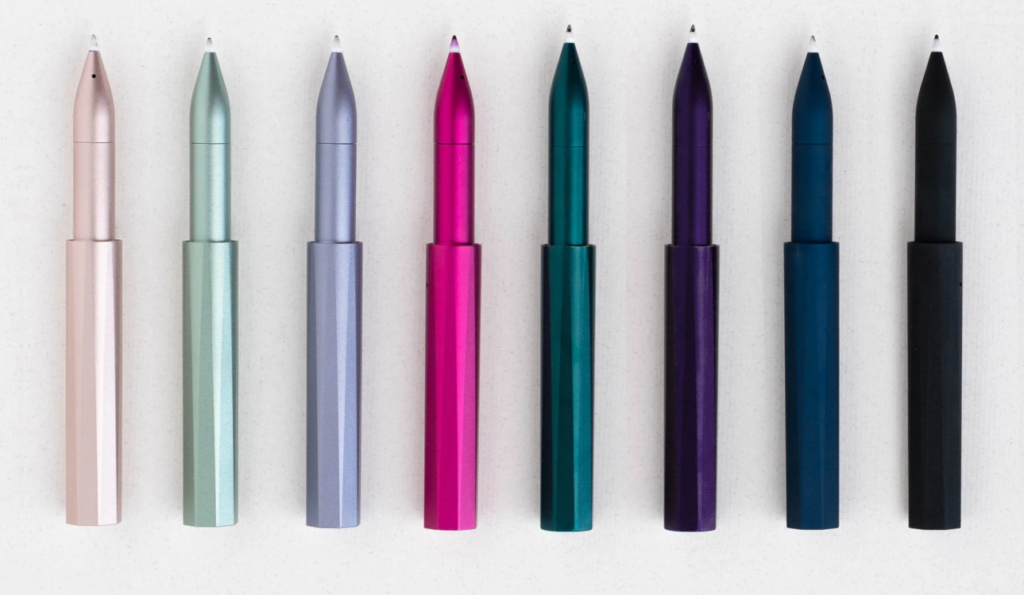
One of the options that kept showing up in searches was Tom’s Studio Wren. Designed to be highly portable, the pen and cap work together to keep the ink from escaping. The Wren has a great little design where the cap becomes part of the pen when you open it and put it together. In the photo above, the larger diameter portion of the pen is the cap and the whole of the pen (with ink and reservoir) is contained within the cap with multiple o-rings to keep it from leaking.
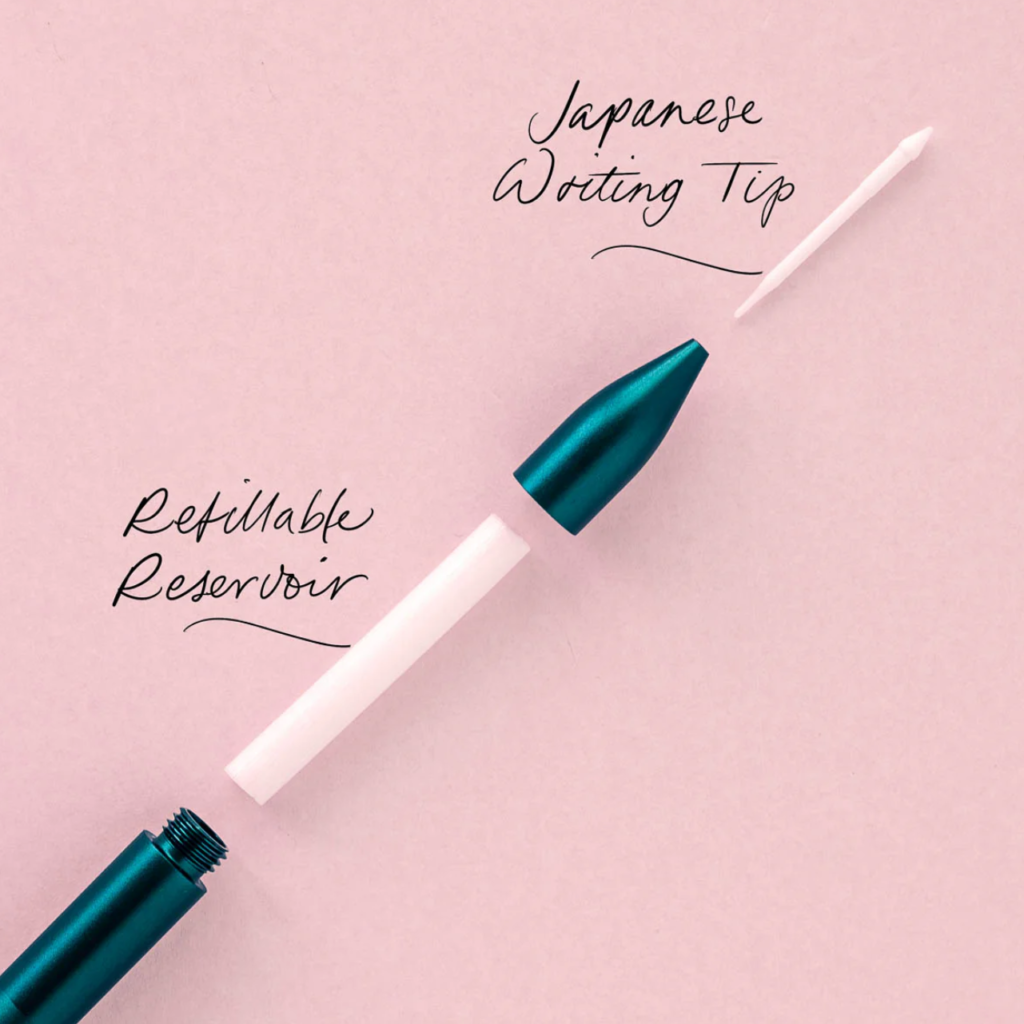
The reservoir works via capillary action and, to fill the ink, you just dip it into a bottle of ink and watch it climb. The tip carries the ink to the paper and has much the same feel as a ball-point pen. Replacement reservoirs and tips can be purchased from Tom’s Studio (located in the UK and at reasonable prices) and a color change is as quick as a tip/reservoir change-out. You could wash both, but that promises to be messier than just getting new ones. Plus, as long as the ink is protected from drying out, switching back is even easier — because you don’t need to charge/load the reservoir or the tip if you kept them handy.
I’m instantly in love and am forcing myself to wait until my birthday before I get their fine-liner pen for when I want really sharp lines. And don’t get me wrong, the example handwriting looks much like what the output I was getting on this little pen (with better penmanship in the picture), so it is already a pretty sharp line that flows like a fountain (faster drying and less messy) and feels like a ball-point (but smoother).
I then splurged and picked up a hardbound A5-sized writing journal. It is lined, but I’m tempted next time to go blank so that I can do some mind-mapping when it suits me. A5 is about the right size to carry in a back pocket if you want to. A6 might work even better, but threatens to be too small to do any significant writing.
Must resist finding more pens…
Leave a comment. Markdown use is permitted.