
I’m currently reading through Trouble Boys: The True Adventures of The Replacements, a biography that I picked up on sale for Kindle a week or so ago. I’m less than halfway through it but, by golly, it is a great read already — although I might have to admit being biased because I lived in Minneapolis at the time that the story largely takes place and it fits with my memories fairly well.
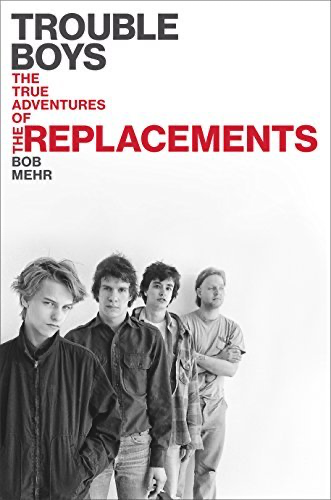
Growing up in 70s-80s Minneapolis, Minnesota was a fantastic time for someone who loved music such as myself. I didn’t really move beyond my family’s taste in music until 1980 or so (which, even by my eclectic standards, was abysmal), but the scene had only really started building up steam the decade before and was just coming to a head by around then anyway.
Most folks will be familiar with the more popular music scene established by Prince and entourage. And certainly, His Purpleness left his fingerprints everywhere in town, but there was the lesser known midwest punk scene going on here as well, and Prince had little to nothing to do with most of that, although some acts did benefit from his success.
And, while we had our fair share of kids running around all punk in town, the bands tended to eschew the fashion elements of the punk movement and focused instead on just making music. And, really, most of the bands didn’t come from privileged backgrounds (The Suburbs being one of the few exceptions), so they had to choose between buying gear or buying clothes. In the middle of Minnesotan winters, who has the time to get all gussied up only to put on a thick down-filled jacket and a knit hat? We’re eminently practical (or were so in the 70s-80s). The grunge trend of the 90s borrowed Minnesota’s layered clothing and made it fashion — for us, it was a way to stay comfortable when dealing with Mother Nature’s wild mood swings in spring and autumn. Besides, you could buy flannel shirts for pennies on the pound at the Ragstock warehouse store. In the 80s, most of our families were Reaganomics-broke [my own family had to take government food assistance when the economy was so bad that my father was unemployed for nearly nine months].
Again, it wasn’t so much being punk and it was being practical. Only rich kids could afford to dress “authentic punk”. And it might have looked cool, but it cost money most of us didn’t have.
Even being underage for drinking (drinking age was 19 years old until 1986, and then it jumped up to 21 year old), there were plenty of opportunities to catch live acts, often for a fistful of dollars. By the time I was able to work and the economy settled down, I spent most of my disposable income, meagre as it was, on records and live music. And the occasional flannel shirt that I might wrap around my waist as often as I wore it over a ratty t-shirt.
This then was the era of local bands such as Hüsker Dü, Suicide Commandos, The Suburbs, Dark Carnival, Otto’s Chemical Lounge, The Mighty Mofos and, yes, The Replacements.
While I caught acts that I can’t even recall what the band’s name were, I did tend to see Hüsker Dü and The Replacements any chance I could get, although the antics from both bands tended to relegate them to drinking shows, they both had sizable enough followings in the younger crowd to warrant all-age gigs as well.
And, while I knew The Replacements came from more humble backgrounds, back then you didn’t talk about things like that. Reading this book is really hitting home as to the why of their appeal for me. Paul Westerberg, singer and songwriter for the band was known for embracing their misfit nature:
“Back when they got their first little flush of fame, Westerberg would say, as a cockeyed boast, that they were losers, that there wasn’t a high school diploma or a driver’s license among them.”
While I might have started of my high school years as a nerdy brainiac, I quickly got bored with a school environment that was often more about babysitting me into adulthood than it was in giving me an education. There were exceptions, certainly; but on the balance of the whole, scholarship was more accidental than intentional. By my junior year, I seriously considered dropping out. And would have, if the new writing program hadn’t become available. It is no understatement to say that the writing class was what encouraged me to stay in school long enough to get my diploma.
I was on a parallel path towards being a “loser”, and might never had gotten my driving license had I not been in a band that rehearsed in a town outside the suburbs (at the time, now it is a second-ring suburb) and my parents had told me they were tired of driving me there on Saturdays.
I wasn’t inspired to emulate The Replacements, but I could see things their way all on my own.
My extended family was filled with alcoholics. They let me have some too because, isn’t it cute to see a kid drunk on holidays? Everyone smoked. Everyone put down everyone younger as being losers. Our achievements were met with eyerolls instead of encouragement. Gen X was regularly put down as the slacker generation, and my extended family had no compunctions about making sure we knew how they felt about us, especially the Boomers.
I think it was a larger thing at the time than anyone realized, least of all the kids.
The appeal then, I’d argue, was that instead of fighting a losing battle rejecting such labels, some of us embraced our loser status in order to sap the power such labels had over us. The Replacements went a step further and tapped that loser label and jumped into the deep end of the pool head first.
In nineth grade, one of my classmates inspected what I was wearing and told me, “I hope you don’t think having bedhead and wearing flannels make you punk, Michael.” I looked at him, wiped the sleep out of my eyes and, with sincere surprise that he thought I was trying to be punk, I said: “Now why did you have to wake me from my nap with something like that? I never claimed to be a punk, quit assuming shit about me, ya nerd.” “Loser,” was his reply. “Yep,” I said before trying to catch another wink or two while the more industrious kids in the class did the worksheets that never were graded by the teacher who sat bored at the head of the civics class. [Side note: to test my theory, I responded to a number of worksheet questions with BS answers and even once wrote that I was unconvinced that the answers were being checked. Only after about 25-30 worksheets with such responses did the teacher notice and say something to me, thus proving my point. And thereby justifying my naps and skipped classes. Lectures were nonexistent.]
It sounds like the lads had similar tales and, because they hinted at those tales in their lyrics, I could relate to them. They had bigger and more dysfunctional family problems (especially the Stinson brothers), but the flavor was similar to my experiences growing up.
Later, I rented an apartment near the area where The Replacements used to jam before they got big enough to move out of the basement — not because it was their old stomping grounds, but the rents were cheap and I didn’t have to worry about getting knifed just for walking down the street (yes, Minneapolis had areas like that in the 80s; now it has progressed to crossfire in those areas). Reading the book reminds me of just how much the area has been gentrified since I lived there: all the old brick hangouts are replaced with colors, glass and chrome and the seediness has been largely wiped away, thus removing the charm of the neighborhood. Even with my professional salary, I couldn’t afford to live there these days. My, how things have changed.
The book mentions storefronts, bars and record stores that no longer exist, or that have been yuppified into submission, so there is also an element of nostalgia as I read the book. But the best part of the book is getting to know the band as the real people they were, bruises and broken bones, instead of some hyped up and polished turds. I think that what made the band my kind of band is that they were losers like I was at the time, and they celebrated that status somewhat, rather than let it bring them down.
So far, I’m enjoying the road trip down memory lane. It’s a nice break from reading fiction. Already recommended, but only if you have an interest in the band or reading about the Minneapolis music scene of the era (there’s plenty of non-Replacement material on that topic as well).
5 responses to “Trouble Boys”
I am around the same age. Lived in West Michigan my whole life. Consider it a parallel universe to yours, because everything you mentioned is replicated here. The town 10 miles to my south has always been called Flannel City USA. The layered clothing? I thought grunge borrowed that from me. Cuz i have layered my whole life. Hell, I believe I even saw Husker Du at a show in Grand Rapids or Detroit. Music? I play metal, but I will listen to music for 10 hours a day sometimes. Jazz, rock, classical, metal, punk, polyphonic, Arabic, opera, whatever suits me. Also made four instrumental hard rock albums that sound sort of like the Aristocrats. Just wanted you to know because sometimes it takes someone with a similar background to appreciate the things we tinker with.
Grunge did borrow it from the upper midwest. 😉
I’m more particular about what I will NOT listen to than what I will listen to, so I hear you. I can’t think of any current rap, current country or current Top-40 pop that I can stand to listen to, but I have my favorites in all those genres in earlier decades.
I can only imagine metal Aristocats. Sounds up my alley (I used to have a thing for playing punk variants of old classic tunes — often not well, mind you, but it was recognizable when I did it.
Thanks for sharing you background. Yeah, I suspect you “get” my tendency to play around and only maybe make something a fully polished song on occasion. Cheers!
It must feel strange to find a story that fits so well with your own memories, Michael; as though it had been written with you in mind. More usually we find a bit here and a bit there of our own experiences. Whatever, I’m glad you’ve now found a book that you can relate to in such a major way, and that you’re enjoying it. 😊
Well, aside from a handful of years between us, we were contemporaries. I was the audience and they were the band and we hung out in the same places — that makes it easier to relate to. I’m not sure if the book would resonate with someone quite so much who wasn’t part of the period and scene. But it is a nice trip down memory lane and it fills in the gaps that I was not aware of in the background (or heard rumors of, but you know how the nature of rumor can be far from the reality).
A meaningful experience. 🙂